
Documents Required for a Canada PR Application: Full Checklist

What Documents are Required for a Canada PR Application? To apply for Canadian Permanent Residency (PR) through the Express Entry system (e-APR), candidates must submit mandatory profile and supporting documents within 60 days of receiving an Invitation to Apply (ITA). The primary documents required for a Canada PR application include: Complete Canada PR Document Checklist: 2-Stage Overview Securing Canadian Permanent Residency requires meticulous documentation. Submitting an incomplete application or uploading non-compliant files is the single largest contributor to Express Entry application refusals. IRCC splits documentation requirements into Stage 1 (Profile Creation) and Stage 2 (Post-ITA e-APR Submission). ┌──────────────────────────────────────────────────────────────────┐ │ STAGE 1: Express Entry Profile Creation │ ├──────────────────────────────────────────────────────────────────┤ │ • Valid Passport │ │ • Language Test Results (IELTS / CELPIP / PTE / TEF / TCF) │ │ • Educational Credential Assessment (ECA) │ │ • Provincial Nomination Certificate (If applicable) │ └──────────────────────────────────────────────────────────────────┘ │ ▼ ┌──────────────────────────────────────────────────────────────────┐ │ STAGE 2: e-APR Submission (60 Days Post-ITA) │ ├──────────────────────────────────────────────────────────────────┤ │ • Police Clearance Certificates (PCC) │ │ • Upfront Medical Exam (IME) │ │ • Detailed Work Experience Letters & Proof of Pay │ │ • Proof of Settlement Funds (Bank Letters & 6-Month Statements) │ │ • Civil Documents (Birth, Marriage, Dependent Records) │ └──────────────────────────────────────────────────────────────────┘ 1. Stage 1 Documents: Profile Creation Requirements Before entering the Express Entry pool, candidates must possess verified documentation to support their Comprehensive Ranking System (CRS) score claims. Passport & Travel Documents Language Proficiency Results Language test results must be valid at both the profile creation stage and the time of official application submission (valid for 2 years max). Educational Credential Assessment (ECA) For non-Canadian educational qualifications, candidates must submit an ECA from an IRCC-designated organization (such as WES, ICAS, IQAS, ICES, or CES). 2. Stage 2 Documents: e-APR Mandatory Checklist (Post-ITA) Upon receiving an Invitation to Apply (ITA), the 60-day deadline begins. The following documents must be scanned and uploaded to the IRCC online portal. DOCUMENT COMPLIANCE RATINGS (IRCC ACCEPTANCE ACCURACY) Work Experience Letters ████████████████████ 98% Compliance Standard Proof of Funds ██████████████████ 95% Compliance Standard Police Clearance (PCC) ████████████████████ 99% Compliance Standard Upfront Medical (IME) ████████████████ 91% Compliance Standard 1. Proof of Work Experience Each claimed work experience must be substantiated with precise documentary evidence matching your designated National Occupational Classification (NOC) TEER code. Mandatory Work Reference Letter Requirements: Secondary Proof (Highly Recommended): 2. Proof of Settlement Funds Unless applying under the Canadian Experience Class (CEC) or holding a valid Canadian job offer with authorization to work in Canada, candidates must demonstrate sufficient financial resources. Bank Letter Criteria: 3. Identity and Civil Status Documents 4. Police Clearance Certificates (PCC) Candidates and family members over 18 must provide police certificates for every country where they have resided for 6 consecutive months or longer since reaching age 18. 5. Medical Examination (Upfront Medical) Applicants must complete a medical assessment via an IRCC-approved Panel Physician. The panel doctor provides an Information Printout sheet (eMedical sheet) or IMM 1017B form to upload into the portal. UAE-Specific Document Checklist for Canadian PR Applicants Applicants applying for Canada PR while residing in the United Arab Emirates (Dubai, Abu Dhabi, Sharjah, etc.) must prepare region-specific documentation: ┌─────────────────────────────────────────────────────────────────────────────┐ │ UAE-APPLICANT COMPLIANCE MATRIX │ ├───────────────────────────────┬─────────────────────────────────────────────┤ │ Document │ Requirement Standard │ ├───────────────────────────────┼─────────────────────────────────────────────┤ │ UAE Police Clearance │ Ministry of Interior (MOI) / Dubai Police │ │ Foreign Document Attestation │ MOFA (UAE) & Certified English Translation │ │ Proof of Funds Currency Conversion │ Bank statements in AED with CAD Equivalency│ │ Work History Proof │ MOHRE Contract + Stamped Bank Salary Credit │ └───────────────────────────────┴─────────────────────────────────────────────┘ 5 Critical Document Mistakes That Cause Express Entry Rejections Based on analytical review of IRCC refusal notices, avoiding these common errors will safeguard your application: Frequently Asked Questions (FAQ) What happens if I cannot obtain an official work reference letter? If an employer refuses to issue a letter on company letterhead, provide a detailed Letter of Explanation (LOE). Attach secondary supporting proof: employment contracts, pay slips, colleague affidavits, tax filings, and written proof of your formal request to the employer. Are digital copies of my documents accepted by IRCC? Yes. All documents uploaded to the Express Entry electronic Application for Permanent Residence (e-APR) must be clear, high-resolution color scans of the original documents (PDF, JPG, or PNG format under 4 MB per file). Do I need to translate documents that are partially in English? Yes. If any part of a document (including official stamps or seals) is in a language other than English or French, you must provide a full certified translation alongside a copy of the original document. Optimize Your Canada PR Journey Today Preparing your documents accurately before receiving an ITA is the smartest way to ensure you meet the strict 60-day submission window. Contact our Immigration consultants in Dubai to evaluate your eligibility, calculate your score, and ensure a smooth submission:
Canada Work Permit Guide: Types, Eligibility and Employer Sponsorship
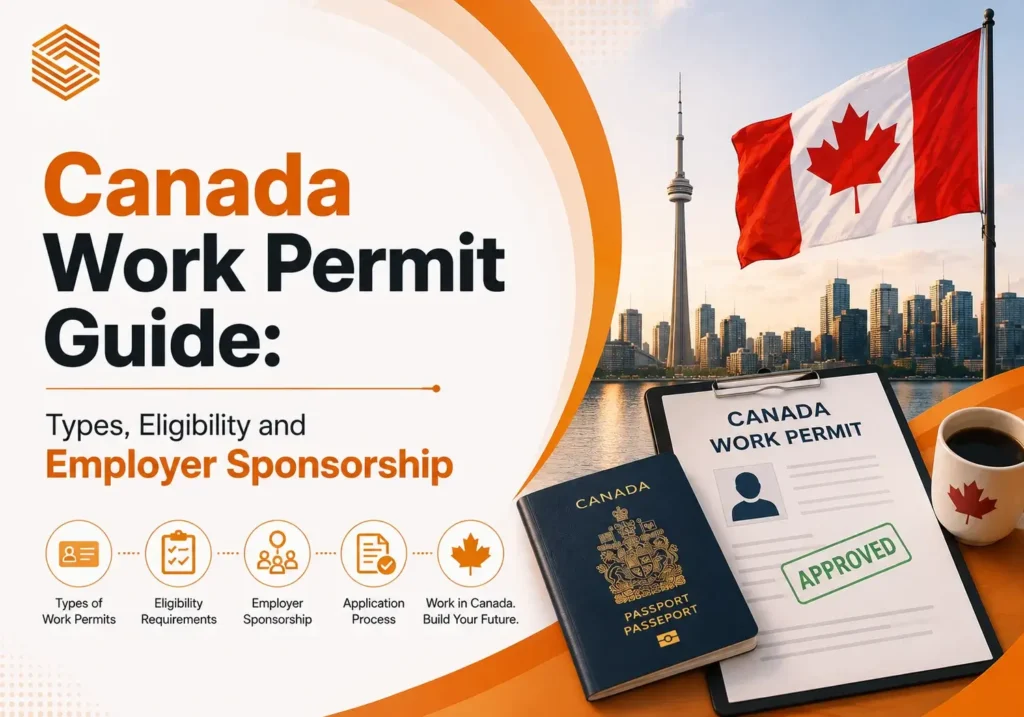
If you are a UAE resident or expatriate planning to work in Canada, a Canada work permit is the document that gives you legal authorization to do so. This guide explains the main permit types, who needs one, the eligibility rules, and how employer sponsorship works, so you can figure out which path fits your situation. Canada Work Permit A Canada work permit is a document issued by Immigration, Refugees and Citizenship Canada (IRCC) that allows a foreign national to work in the country for a set period. Most permits fall under two streams: employer-specific permits that usually need a Labour Market Impact Assessment (LMIA), and open work permits that let you work for almost any employer. Eligibility depends on the stream, the job offer, and your personal circumstances. What Is a Canada Work Permit? A Canada work permit is not the same as a visa. It is the specific document that confirms you are allowed to work in Canada, for how long, and under what conditions. Depending on your nationality, you may also need a temporary resident visa or an electronic travel authorization (eTA) to enter the country. UAE passport holders should check their entry requirement separately from their work permit application. IRCC issues work permits under two broad programs. Temporary Foreign Worker Program (TFWP) Permits under the TFWP generally require the Canadian employer to obtain a positive LMIA from Employment and Social Development Canada (ESDC) before you apply. The LMIA shows that hiring a foreign worker will not negatively affect the Canadian labour market and that no Canadian citizen or permanent resident was available for the role. International Mobility Program (IMP) Permits under the IMP do not require an LMIA. They usually rely on international agreements, reciprocal arrangements, or broader economic and social benefits to Canada. Intra-company transfers, some trade agreement categories, and post-graduation work permits fall under this program. Types of Canada Work Permits Most applicants choose between two main categories. Employer-Specific (Closed) Work Permit An employer-specific work permit ties you to one employer, one job, and often one location. If you change jobs, you generally need to apply for a new permit. This type usually requires a job offer and, in many cases, a positive LMIA. Open Work Permit An open work permit lets you work for almost any employer in Canada without a new LMIA or job offer for each position. Open work permits are commonly issued to spouses or common-law partners of certain permit holders, some post-graduation applicants, and specific humanitarian or bridging categories. Beyond these two categories, several specific permit types exist, including intra-company transfer permits, post-graduation work permits (PGWP), spousal open work permits, and permits issued under free trade agreements such as the Canada-United States-Mexico Agreement (CUSMA). The right option depends on your job offer, education background, and family situation, so it is worth reviewing each category against your own profile before applying. Who Needs a Canada Work Permit and Who Is Exempt? Most foreign nationals who want to work in Canada need a work permit before they start a job. A small number of situations are exempt, including certain business visitor activities that do not involve entering the Canadian labour market, and some short-term work covered under Canada’s Global Skills Strategy for specific highly skilled roles or researchers. If you are unsure whether your planned activity in Canada counts as work under Canadian immigration law, it is worth confirming this before travelling, since working without authorization can affect future applications. Canada Work Permit Eligibility Requirements General eligibility rules apply to most Canada work permit applicants, regardless of the specific stream. For LMIA-based applications, the employer also has requirements to meet, including proving genuine efforts to recruit locally and offering wages that match the prevailing rate for the occupation. How Does Employer Sponsorship Work for a Canada Work Permit? Employer sponsorship for a Canada work permit generally follows one of two paths. LMIA-Based Sponsorship The Canadian employer applies to ESDC for an LMIA before you can apply for the work permit. This involves advertising the position, documenting recruitment efforts, and demonstrating that hiring you will not harm the domestic labour market. Once ESDC issues a positive LMIA, the employer gives you the LMIA number and a copy of the approval, which you include in your work permit application. LMIA-Exempt Sponsorship Some employer-sponsored roles skip the LMIA step entirely. This applies to certain intra-company transfers, specific trade agreement categories, and roles covered under significant benefit provisions. Instead of an LMIA, the employer submits an offer of employment through the IRCC Employer Portal and pays an employer compliance fee. In both paths, the employer’s job offer needs to reflect the actual duties, wage, and conditions of the role. Job offer details that do not match your work permit application can lead to delays or refusal. Documents Required for a Canada Work Permit Requirements vary by stream, but most Canada work permit applications include: UAE-based applicants should also prepare certified translations of any documents not issued in English or French, since IRCC generally requires translations from a certified translator along with the original documents. Canada Work Permit Application Process The general process for a Canada work permit follows these steps. Canada Work Permit Processing Time Processing times for a Canada work permit vary based on the stream you apply under, the completeness of your application, and the country where you are applying from. IRCC publishes current processing time estimates on its website, and this is the most reliable place to check before you plan travel or notify an employer of a start date. Because processing times change often, avoid relying on figures from other sources that may no longer be current. Canada Work Permit Fees and Costs Canada work permit applications involve government fees that are separate from any professional consultant fees you may choose to pay. Government fees generally include a work permit processing fee for the applicant, an additional open work permit holder fee if you are applying for an open permit,
Canada Study Permit Guide 2026: UAE Requirements, PAL & Timelines
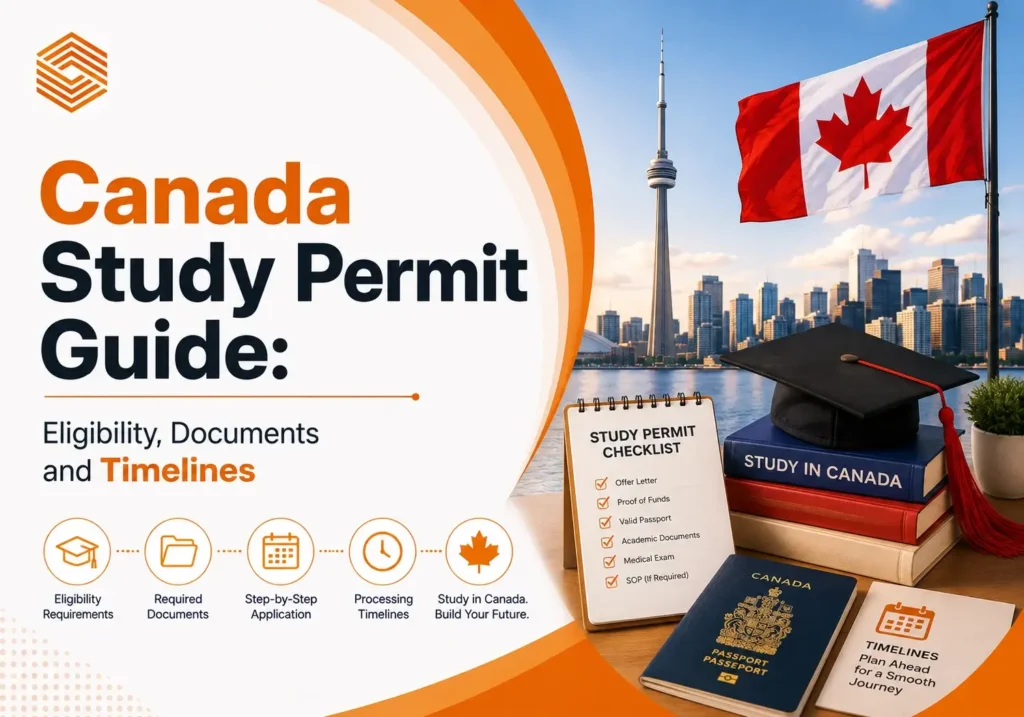
What is a Canada Study Permit? A Canada Study Permit is an official authorization issued by Immigration, Refugees and Citizenship Canada (IRCC) that allows foreign nationals to study at Designated Learning Institutions (DLIs) in Canada. It is not a travel visa; depending on your nationality, you will also receive a Temporary Resident Visa (TRV) or Electronic Travel Authorization (eTA) alongside your permit to enter the country. To secure approval from the UAE, applicants must meet IRCC eligibility standards, demonstrate sufficient financial capacity, submit a Provincial Attestation Letter (PAL), and prove non-immigrant intent. Canada Study Permit Overview for UAE Residents Applying for a Canada Study Permit from the UAE requires navigating both national IRCC regulations and regional logistics, such as attending biometrics appointments at VFS Global centers in Dubai or Abu Dhabi. Eligibility Criteria for UAE Applicants To qualify for a Canadian study visa, you must satisfy strict criteria established by Canadian immigration law: Document Checklist for Canada Study Permit Submitting a complete document package is vital to avoiding processing delays or refusal. Document Category / Purpose Key Requirements Letter of Acceptance (LOA) Academic Issued by a registered DLI showing program details and duration. Provincial Attestation Letter (PAL) Administrative Issued by the host province; required unless exempt (e.g., Master’s/PhD). Proof of Identity Identification Valid passport with at least 6 months validity beyond intended stay. Financial Support Proof Financial Bank statements (6 months), GIC certificate, or sponsor documentation. Statement of Purpose (SOP) Personal Essay Explains study rationale, choice of institution, and ties to home country/UAE. Biometrics Receipt Verification Proof of payment for biometrics collection at VFS Dubai or Abu Dhabi. Financial Requirements: Living Expenses Thresholds In addition to first-year tuition, IRCC mandates that applicants show guaranteed access to living funds. Acceptable forms of financial proof include Canadian bank accounts in your name, Guaranteed Investment Certificates (GIC) from participating financial institutions, proof of a student/educational loan, bank statements, or proof of paid tuition and housing. Step-by-Step Application Process & Timelines Applying from the UAE involves a clear sequence of steps: Application Processing Benchmark: IRCC processes standard study permit applications from the UAE within 8 to 12 weeks following biometrics enrollment. Submit applications at least 3 to 4 months prior to your program intake date to avoid delays. Frequently Asked Questions Who is exempt from submitting a Provincial Attestation Letter (PAL)? Applicants pursuing Master’s or Doctoral degree programs, primary or secondary school students, and students applying for a study permit extension from within Canada are generally exempt from the PAL requirement. Can UAE residents work while holding a Canada Study Permit? Yes, full-time students at eligible DLIs can work off-campus up to 24 hours per week during regular academic sessions and full-time during scheduled academic breaks. What are the primary reasons for Canada Study Permit refusals? Common grounds for refusal include insufficient proof of funds, lack of non-immigrant intent (failing to prove ties to the UAE or home country), choice of program inconsistent with past academic history, or an incomplete application package. Need expert guidance on crafting your Statement of Purpose or structuring financial proof for your application? Contact our immigration specialists in Dubai today for a personalized application assessment.
Canada Provincial Nominee Programs: How the PNP System Works
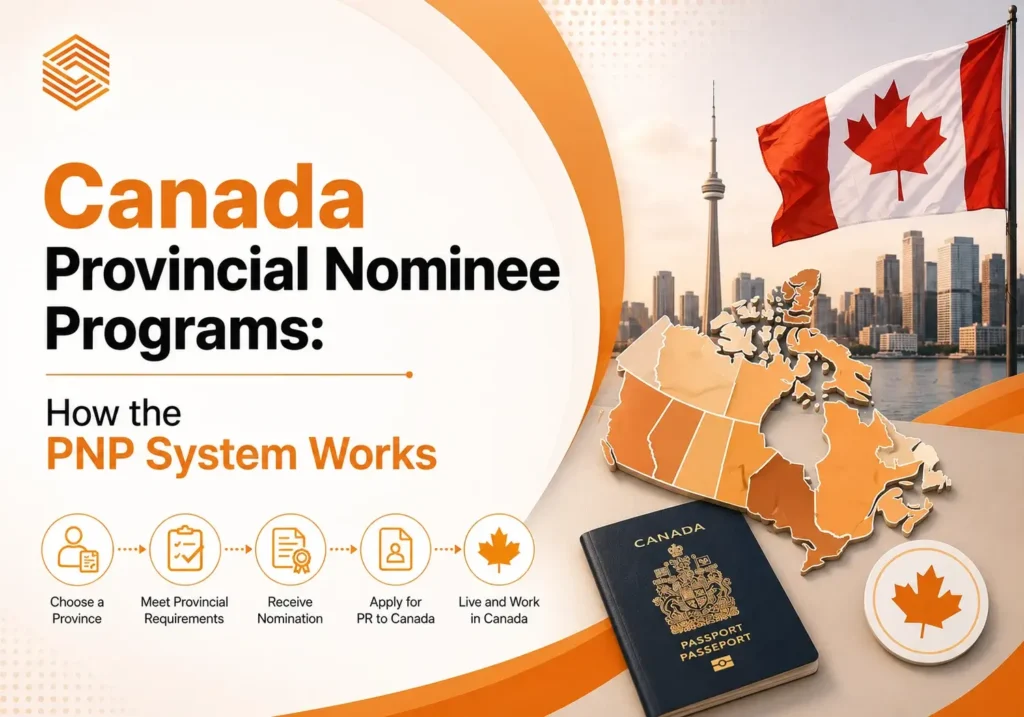
Canada Provincial Nominee Programs give skilled workers, recent graduates, and entrepreneurs a clear path to permanent residency (PR). Instead of relying only on a single federal point system, individual Canadian provinces pick candidate profiles based on local job markets and regional needs. Understanding how Canada Provincial Nominee Programs operate helps you boost your points score, secure an official nomination, and land your PR visa faster. What is the Canada Provincial Nominee Program (PNP)? The Canada Provincial Nominee Program (PNP) allows 11 Canadian provinces and territories to pick foreign workers and graduates for Permanent Residency (PR). The system offers two main pathways: Express Entry-aligned (Enhanced) and Non-Express Entry (Base). Getting a provincial nomination adds 600 extra points to your Express Entry score, ensuring you get an invitation to apply for permanent residence from federal immigration authorities (IRCC). How the PNP System Works: Express Entry vs. Non-Express Entry Canada runs its nominee programs through two main setups shared between provincial governments and federal immigration authorities (IRCC). ┌──────────────────────────────────────────┐ │ Canada Provincial Nominee Programs │ └────────────────────┬─────────────────────┘ │ ┌──────────────────────────┴──────────────────────────┐ ▼ ▼ ┌───────────────────────────┐ ┌───────────────────────────┐ │ Express Entry Streams │ │ Non-Express Entry Streams │ │ (Enhanced) │ │ (Base) │ └─────────────┬─────────────┘ └─────────────┬─────────────┘ │ │ ┌──────────────┴──────────────┐ ┌──────────────┴──────────────┐ ▼ ▼ ▼ ▼ +600 Bonus Points Processing Time: Direct Application Processing Time: to Points Profile ~7–8 Months to Province ~13–18 Months 1. Express Entry Streams (Enhanced) These streams link directly to Canada’s main online points system. 2. Non-Express Entry Streams (Base) These streams run outside the central points pool and focus on specific trades, entry-level roles, or business investments. 2026 Target Allocation & Overview by Province Each province runs its own streams based on local job openings and population growth goals. Quebec runs its own distinct immigration system, and Nunavut does not use a PNP setup. Province / Territory Program Name Top In-Demand Fields Annual Quota Estimates Ontario OINP Tech, Healthcare, Skilled Trades, Foreign Workers ~21,500 British Columbia BCPNP Tech Roles, Healthcare, Early Childhood Educators ~11,000 Alberta AAIP Tech Pathways, Rural Renewal, Skilled Trades ~10,250 Saskatchewan SINP In-Demand Occupations, Express Entry Streams ~8,500 Manitoba MPNP In-Province Skilled Workers, Overseas Skilled Workers ~9,500 Nova Scotia NSNP Healthcare Workers, Skilled Labor Priorities ~5,000 New Brunswick NBPNP Skilled Trades, French-Speaking Applicants ~5,500 Prince Edward Island PEI PNP Healthcare, Construction, Tourism ~2,100 Newfoundland & Labrador NLPNP Priority Technical Skills, Health Professionals ~3,050 Yukon & NWT YNP / NT PNP Local Employer-Driven Streams ~1,200 Step-by-Step Application Guide Step 1: Check Qualifications & Set Up Your Profile Get your degree or diploma verified through an official credential check (like WES). Take your language tests (IELTS or CELPIP for English; TEF or TCF for French). Create your central Express Entry profile to set your base points score. Step 2: Pick Your Target Province Match your work history and job code (NOC TEER classification) with active job shortage lists in each province. Step 3: Register Your Interest Sign up on the specific province’s portal to show you want to settle there. Provinces rank candidates using their own scoring systems based on age, work history, language scores, and local ties. Step 4: Receive Your Nomination When selected, the province sends you a nomination invite. You usually have 30 to 60 days to turn in your complete work records, bank statements, and personal identity documents. Step 5: Get Final Permanent Residence Approval Accepting the nomination gives you 600 extra points (Express Entry) or lets you submit a direct PR application (Base stream). Pass your medical check, police checks, and fingerprinting to receive your final confirmation of PR. Get best immigration consultancy service in Dubai Key Advantages for Candidates in the UAE & GCC If you are applying from Dubai, Abu Dhabi, or across the Gulf region, PNP pathways offer practical benefits: Real-World Rules Most Guides Miss Frequently Asked Questions (FAQ) 1. Which Canadian province is easiest for foreign applicants? It depends on your work experience and language scores. Saskatchewan (SINP) and Nova Scotia (NSNP) are popular choices because they run streams that do not require an active Canadian job offer if your line of work is listed as in-demand. 2. Can I apply for a PNP without a job offer? Yes. Multiple options do not require a Canadian job offer. Top examples include the Saskatchewan Occupations In-Demand stream, Ontario Human Capital Priorities stream, and select targeted draws in Alberta. 3. How much does a PNP application cost? Provincial processing fees range from CAD 0 (Newfoundland and Labrador) up to CAD 1,500 (Ontario). On top of provincial fees, federal PR processing fees (CAD 1,525 per adult, including the right of permanent residence fee) apply. 4. What happens right after I get nominated? For Express Entry streams, the nomination appears in your online account. Once you click accept, 600 points auto-populate into your score, guaranteeing an invitation for PR during the next draw.
Canada Express Entry Explained: A 2027 Guide for UAE Applicants
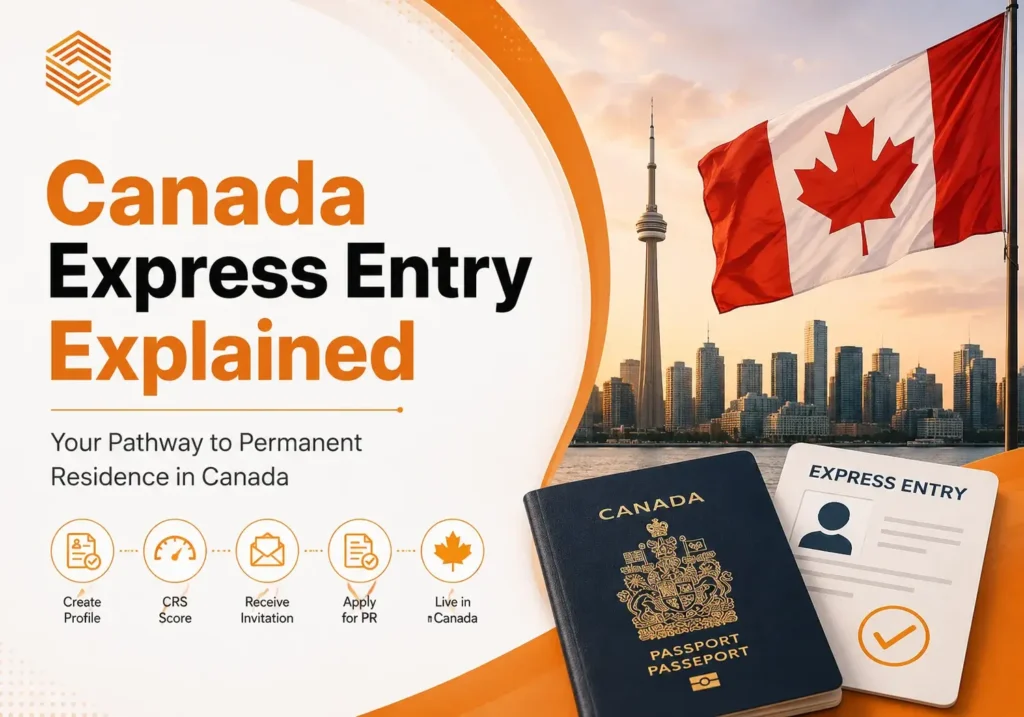
If you live and work in the UAE and want to settle in Canada permanently, Canada Express Entry is the program you will run into first. It is the federal government’s main system for skilled worker immigration, and it is also going through real changes for 2027. This guide breaks down how the system works today, what IRCC has proposed for next year, and what UAE-based applicants should check before they build a strategy around it. Canada Express Entry Canada Express Entry is the online system IRCC uses to manage permanent residence applications from skilled workers under three programs: the Federal Skilled Worker Program, the Canadian Experience Class, and the Federal Skilled Trades Program. Candidates get a Comprehensive Ranking System (CRS) score, and IRCC invites top-ranked candidates to apply. For 2027, IRCC is consulting on new categories and possible CRS changes, but nothing is confirmed yet. What Is Express Entry? Express Entry is not an immigration program on its own. It is the application management system that Canada uses to process three programs at once: You submit one profile, and IRCC checks it against all three programs. If you qualify for at least one, you enter a ranked pool of candidates. IRCC then invites the highest-ranked profiles to apply for permanent residence. How Does the Express Entry Process Work? The process runs in clear stages: IRCC runs three types of rounds. General rounds invite the highest CRS scores across all programs. Program-specific rounds target one of the three programs. Category-based rounds invite candidates who match a specific occupation group or language skill that the government has flagged as a priority. Who Can Apply Through Express Entry? Each of the three programs has its own bar to clear. Federal Skilled Worker Program: at least one year of continuous, full-time (or equivalent) skilled work experience in the last 10 years, in a job under NOC TEER 0, 1, 2, or 3. You also need a minimum language score and, if your education is foreign, an ECA. On top of that, you need at least 67 points on the FSWP’s own selection grid, which is separate from your CRS score. Canadian Experience Class: at least one year of skilled, professional, or technical work experience in Canada within the last three years. You need CLB 7 across all four language abilities if your job falls under TEER 0 or 1, or CLB 5 if it falls under TEER 2 or 3. Federal Skilled Trades Program: at least two years of full-time trade experience in the last five years, plus either a full-time job offer of at least one year or a certificate of qualification from a Canadian authority. Language requirements are CLB 5 for speaking and listening, and CLB 4 for reading and writing. You only need to qualify for one of the three programs to enter the pool. Understanding the CRS Score The Comprehensive Ranking System (CRS) is the points formula that ranks every candidate in the Express Entry pool. It scores you on: The maximum possible score is 1,200. A provincial nomination is worth 600 points on its own, which is usually enough to guarantee an ITA in the next round. One change worth knowing: as of March 25, 2025, a valid job offer no longer adds CRS points. A job offer can still help you qualify for the FSWP or FSTP, but it will not boost your ranking the way it used to. Express Entry Draws and CRS Cutoffs in 2026 CRS cutoffs move constantly, and they depend on how many invitations IRCC issues and how the pool looks at that moment. A larger round, or a round aimed at a narrow category, usually produces a lower cutoff because IRCC is inviting further down the ranked list. Recent 2026 activity gives a useful picture of where things stand: Round type 2026 CRS range Notes Canadian Experience Class 507 to 523 Latest CEC round (Aug 18, 2026) hit 523, the highest CEC cutoff of the year French-language proficiency 382 to 393 The most accessible category by volume; a new 2026 low of 382 came on Aug 19 Healthcare and social services 467 to 475 Consistently well below CEC and general cutoffs Trades occupations 477 (first 2026 round, April 2) Second-lowest labour-shortage category after healthcare Transport occupations 470 (first 2026 round, Aug 7) Reintroduced with a revised occupation list in February 2026 Senior managers with Canadian experience 392 (second round, July 10) Lower than the category’s first round Provincial Nominee Program 663 to 816 High because a nomination adds 600 points on top of the base CRS score STEM occupations have not had a round in more than 27 months, so treat that category as inactive for planning purposes. The agriculture and agri-food category was retired for 2026 entirely. These numbers change with every round, so always confirm the latest cutoffs on IRCC’s Express Entry rounds of invitations page before making a decision based on a specific score. What Changes Are Coming for Canada Express Entry in 2027? This is the part most guides get wrong, so it is worth being precise. Nothing about the 2027 Express Entry categories is finalized. What has actually happened is this: IRCC opened a public consultation on August 4, 2026, asking which of the 10 active 2026 categories should carry into 2027, whether labour-shortage categories should use narrower occupation lists, and whether new talent-focused categories should be added. The consultation closes September 1, 2026. IRCC has not set a date for announcing the final 2027 list, though based on past timelines an announcement in late 2026 or early 2027 is the most likely window. Four new categories are on the table: What is not changing before 2027: the current 2026 category list, CRS cutoffs, and draw schedules stay exactly as they are for the rest of this year. Candidates do not need to update their profiles now. If new categories take effect, IRCC will match eligible profiles automatically using information already on file. A separate, earlier
Express Entry vs PNP Canada: Which is Better?

When it comes to immigrating to Canada, many skilled workers face the classic question: Express Entry vs PNP Canada – which one should you choose? In this detailed guide, we’ll explore this important topic using real insights, expert tips, and easy-to-understand explanations. Whether you are new to the process or exploring new options, you’ll discover what makes each program unique, how they work, and which pathway might suit your dreams of living in Canada. Let’s dive into the details and answer the big question: Express Entry vs PNP Canada – which is better? Express Entry vs PNP Canada: Which is Better? Choosing between Express Entry vs PNP Canada is not just about speed – it’s also about finding the program that matches your skills, goals, and life situation. To help, we’ll explain each program in detail and show why many newcomers compare them. What is Express Entry Canada? Express Entry is an online immigration system launched by the Canadian federal government in 2015. It manages applications for permanent residency (PR) for skilled workers under three main programs: Here’s how it works: What makes Express Entry popular is its transparency and relatively faster processing time (often as quick as six months after the ITA). It rewards candidates who have strong language skills, higher education, and Canadian work experience. Expert Tip: Before you start, always check your eligibility using the official IRCC eligibility tool. It can save you time and help you understand if you qualify. Express Entry is highly competitive, and many applicants improve their scores by: What is PNP Canada? The Provincial Nominee Program (PNP) is another important pathway for Canadian PR. Each province and territory (except Quebec) has its own PNP. These programs are designed to meet local labor market needs by attracting skilled workers, businesspeople, and even international graduates. If a province nominates you, it usually means you’ll receive an extra 600 CRS points if you are already in the Express Entry pool, which almost guarantees an ITA. Alternatively, you might apply directly to the province through a “base” PNP stream not linked to Express Entry. Each PNP has different requirements, but they all look for candidates who can: Example Provinces Offering PNPs: Key Differences Between Express Entry and PNP Many people compare Express Entry vs PNP Canada because both lead to PR, but they have some big differences: Feature Express Entry Provincial Nominee Program (PNP) Managed by Federal government Provinces & territories Points system CRS score decides ITA Province decides based on its own criteria Processing time Faster (about 6 months) Longer (could be over 12 months) Job offer Helpful but not required Often required or strongly preferred Flexibility Can live anywhere in Canada Must live in nominating province Expert Insight: If you don’t have a high CRS score, getting a provincial nomination can help you succeed. But remember, PNP is for those who genuinely plan to live and work in the nominating province. How Does the Express Entry System and PNP Work? Express Entry System: The Canadian government updates CRS cut-off scores regularly. It’s important to track these changes and plan accordingly. PNP System: The PNP is helpful for candidates with lower CRS scores or with skills in demand in specific provinces. Why Are Express Entry and PNPs Often Confused or Compared? Both programs aim to attract skilled workers and help them become Canadian permanent residents. They overlap because: Ultimately, both pathways are part of Canada’s strategy to meet economic and demographic needs. Also Read: How to Apply for Canada PR from UAE Pros and Cons of Express Entry vs PNP Canada Let’s explore the strengths and weaknesses of each program. Express Entry Advantages: Express Entry Disadvantages: Provincial Nominee Program (PNP) Advantages: PNP Disadvantages: Expert Tip:For faster processing and fewer errors, prepare all documents early, stay updated with provincial draw announcements, and consider professional help for complex cases. FAQs about Express Entry vs PNP Canada Can I apply for Express Entry and PNP at the same time? Yes! You can create an Express Entry profile and also apply to PNPs. Getting a nomination will boost your CRS score. Can we apply for Express Entry after PNP? Yes. If you receive a PNP nomination, you can use it to get extra CRS points and enter Express Entry. How to get provincial nomination for Express Entry? Research provinces where your job is in demand, meet eligibility criteria, and submit an Expression of Interest. How long does it take to get PR after PNP? Usually 12–19 months, but timing depends on the province and your application. People Also Ask Is PNP slower than Express Entry?Yes, often it takes longer because provinces review nominations first. Can I get PNP without Express Entry? Yes, through “base” PNPs not linked to Express Entry. Which province in Canada gives PNP easily?Ontario, Saskatchewan, and Alberta have large quotas and regular draws. Can I apply both Express Entry and PNP? Yes, this strategy often helps applicants succeed. Final Thoughts: Express Entry vs PNP Canada Both Express Entry vs PNP Canada have unique benefits. Express Entry is ideal for candidates with strong CRS profiles and who want to live anywhere in Canada. PNP is better for those with connections to a province or skills in local demand. For the best chance: Either option can help you achieve your goal of living in Canada. Make your move to Canada stress-free. Connect with top-rated immigration consultants in Dubai today!
How to Apply for Canada PR from UAE – Process and Fee (2025 Guide)

Canada remains a top choice for many residents of the UAE dreaming of a better life, quality education, and economic stability. If you’re wondering how to apply for Canada PR from UAE, this detailed guide will help you navigate the process confidently. As someone with years of experience helping UAE residents successfully immigrate to Canada, I’ll share practical strategies and expert insights to reduce errors and speed up your application. Let’s explore this topic together, step by step. What is a Canada PR Visa? A Canada Permanent Resident (PR) visa is an immigration status that allows you to live, work, and study anywhere in Canada indefinitely. It’s your first step toward becoming a Canadian citizen. Canada PR holders enjoy multiple benefits: PR status is issued to individuals through various immigration programs managed by Immigration, Refugees and Citizenship Canada (IRCC), including: The process might seem complex, but with careful planning, understanding requirements, and the right documentation, your dream of moving to Canada is achievable. Do’s and Don’ts of Canada PR Do’s: Don’ts: Remember, your application must reflect honesty, preparation, and thoroughness to avoid rejection. How to Apply for Canada PR from UAE – Step by Step Applying for Canada PR from the UAE might feel overwhelming at first, but if you break it down into clear steps, it becomes much easier. Here’s a detailed, expert guide that explains exactly how to apply for Canada PR from UAE, so you can move forward confidently. Step 1: Check Eligibility Before starting your application, the most important step is to check if you’re eligible. Use the Canada PR eligibility check tool available on the official IRCC website. You’ll answer questions about: Your answers help IRCC calculate if you qualify under programs like Express Entry or PNP. Checking eligibility saves time, so you won’t start an application that doesn’t meet the rules. Expert insight: Many UAE residents skip this step and later discover they don’t qualify — always start here! Step 2: Educational Credential Assessment (ECA) Your degrees or diplomas from the UAE or any other country must be checked to see if they’re equal to Canadian standards. This is called an Educational Credential Assessment (ECA). You can do this through trusted organizations approved by IRCC, such as: The process usually takes a few weeks. When your report is ready, it becomes part of your Express Entry profile. Tip: Request official transcripts from your school or university early, so your ECA isn’t delayed. Step 3: Language Test Language skills are very important when applying for Canada PR. Take a recognized test like: You’ll be tested on: The higher your score, the better your CRS (Comprehensive Ranking System) score — this increases your chances of getting invited. Advice from experts: Many applicants retake the test to get better scores and improve their ranking. Step 4: Create an Express Entry Profile Once you have your ECA and language test results, it’s time to make your Express Entry profile on the IRCC website. Here you’ll share: Make sure your information is complete and true. Your profile is valid for 12 months. While it’s active, you could get invited if your CRS score is high enough. Step 5: Receive Invitation to Apply (ITA) Every few weeks, Canada holds Express Entry draws. If your CRS score is above the cutoff, you get an Invitation to Apply (ITA). This is your chance to move forward. After getting the ITA, you must: Getting an ITA is a big step forward — it means Canada is inviting you to become a permanent resident. Step 6: Submit Application Now it’s time to upload all your documents: Make sure every document is clear, valid, and translated into English or French if needed. Step 7: Pay Fees and Wait Finally, pay the Canada PR application fee online: Once paid, keep the receipt. Then wait as IRCC processes your application. Times vary, but Express Entry often takes around 6–8 months. Expert tip: Keep digital copies and hard copies of all documents, so you can quickly respond if IRCC asks for anything. How to Get Canada PR – Choosing the Best Pathway Many people in the UAE ask: How to get Canada PR? There’s no single answer because Canada offers several pathways. Here’s what you should know about each: Express Entry – For Skilled Workers The Express Entry system is the fastest and most popular. It’s for: Your CRS score is based on age, education, language, and work experience. High scores mean a higher chance of getting an ITA. Tip: Improve your CRS by retaking the language test or getting a provincial nomination. Provincial Nominee Program (PNP) Canada’s provinces and territories run their own programs to attract immigrants. If you want to live in a specific place, check if: A PNP nomination gives you an extra 600 CRS points, almost guaranteeing an ITA. Family Sponsorship If you have close family in Canada (like a spouse, child, or sometimes parent), they might sponsor you for PR. This is a great option for those with family ties. Business Immigration If you’re an entrepreneur or investor, Canada offers programs like: These require investment, business plans, and sometimes experience running a business. Atlantic Immigration Program (AIP) For those willing to live in: A job offer from an employer in these provinces can lead to PR through AIP. Advice: Think about where you’d like to live and research the program that fits your profile best. Canada PR Process – Key Steps to Follow Here’s a full summary of the Canada PR process so you won’t miss anything: Submit ECA and Language Test Results Start by getting your ECA and language test done. These are must-haves to create your Express Entry profile. Enter the Express Entry Pool With your documents ready, make your Express Entry profile. Once submitted, you’re in the pool. Improve CRS Score If your CRS score is below recent cutoffs, improve it by: Receive ITA If your CRS meets the draw cutoff, you’ll receive an Invitation to Apply. Complete Medical
Why Use an Immigration Consultant in UAE?

The United Arab Emirates (UAE) has become a global hub for people who dream of living, working, or studying abroad. Every year, thousands of people living in Dubai, Abu Dhabi, and other emirates explore options to migrate to countries like Canada, Australia, the UK, New Zealand, and more. But the immigration process can be confusing, time-consuming, and stressful.This is where an immigration consultant in UAE steps in — making your journey smoother and your chances of success higher. In this article, we’ll explore why hiring the best immigration consultants in Dubai or anywhere in the UAE is a smart decision. We’ll also look at the types of services they offer and how to choose the right one for your needs. Who is an Immigration Consultant? An immigration consultant is a trained, licensed professional who guides clients through the complex process of applying for visas, permanent residency, and citizenship in another country.In the UAE, many immigration consultants specialize in helping residents move to popular immigration-friendly countries like Canada, Australia, the UK, and New Zealand. Unlike general advisors or travel agents, immigration consultants deeply understand immigration law and policy. They keep track of changing regulations, handle paperwork, and create strategies tailored to each client’s situation. Their job isn’t just to fill out forms. It’s to build your case, highlight your strengths, and help you avoid costly mistakes. Why You Need the Best Immigration Consultants in Dubai Here are the top reasons why working with an immigration consultant in UAE can make a difference in your immigration journey. 1. Individualized Strategies Every immigration journey is unique. Your background, education, work experience, and goals shape your options.The best immigration consultants in Dubai don’t treat your case like just another file. Instead, they design a strategy that highlights your strongest points. For example, if you’re applying to Canada, they might recommend you improve your language test scores or complete an Educational Credential Assessment (ECA) before applying. This personalized approach boosts your chances of getting a visa. Without guidance, you might miss opportunities to strengthen your profile. Consultants see details you might overlook. 2. Handling Paperwork and Documentation Immigration applications often involve hundreds of pages of forms, supporting documents, and evidence. Even a small error can delay or reject your application. By hiring the best immigration consultants in Dubai, you save yourself from this burden. They complete your paperwork accurately and ensure every required document is included. Some consultants, like Regulated Canadian Immigration Consultants (RCICs), are even authorized to submit applications on your behalf. This means less stress for you and a smoother process from start to finish. 3. Licensed and Governed Professionals Reputable immigration consultants are members of official regulatory bodies. For instance, RCICs are licensed by the College of Immigration and Citizenship Consultants (CICC) in Canada. This regulation ensures that your consultant: In contrast, unlicensed advisors might lack up-to-date knowledge or provide incorrect advice. Choosing a licensed consultant protects you from fraud and ensures you’re working with someone qualified to handle your case. 4. Deep Understanding of the Visa System Visa systems can be confusing. Each country has different visa types, categories, eligibility rules, and timelines. For example, Canada offers Express Entry, Provincial Nominee Programs (PNPs), study permits, work permits, and family sponsorships — each with its own criteria. The best immigration consultants in Dubai understand these systems inside out. They can guide you on which visa suits your goals, what documents to prepare, and when to apply. Without this expertise, you might waste time applying for the wrong visa or miss important deadlines. 5. Effective Follow-Ups Even after submitting your application, immigration authorities might ask for: A consultant handles this communication on your behalf. They keep track of your application status and follow up to avoid unnecessary delays. This ongoing support ensures your case keeps moving forward. 6. Exploring Backup Options Not every application succeeds on the first try. But rejection isn’t the end. Immigration consultants can help you: For example, if your Express Entry score is too low, they might suggest applying through a provincial nomination program or explore study or work permits. Having these options ready can make a big difference. 7. Attention to Detail Immigration consultants notice details you might overlook. For example: They help you keep your application updated and compliant with immigration rules. Even small omissions can lead to delays or refusals. Consultants reduce this risk. 8. Solving Complex Problems Some immigration steps are more complex than others. One example is the Educational Credential Assessment (ECA) needed for Canadian immigration. Applicants often get stuck because universities must send sealed transcripts, and some institutions are slow to respond. An experienced consultant knows how to handle these challenges quickly, saving you time and frustration. They’ve seen similar problems before and know what works. 9. Saving Time and Money Time is valuable. Preparing an immigration application alone can take months of research, document gathering, and form-filling. If you make mistakes, your application could be rejected — wasting months and government fees. The best immigration consultants in Dubai do the work efficiently. They help you avoid delays, correct mistakes before submission, and save you money in the long run. Instead of spending hours figuring out legal terms or program rules, you can focus on your job, studies, or family. 10. Keeping Up With Changing Regulations Immigration laws and policies change frequently. For example, Canada updates its points system, adds or removes eligible occupations, and changes program quotas. Staying up to date is almost impossible if you’re not in the field every day. Immigration consultants track these changes. They update your application strategy and documents to meet the latest requirements. This keeps your application competitive and compliant. Types of Immigration Services Consultants Provide The best immigration consultants in UAE offer a range of services, including: They often also offer settlement services, like connecting you with real estate agents, schools, or financial advisors in your destination country. How to Choose the Best Immigration Consultant in UAE Here are some practical tips to help